Penetrating Damp Around Windows and Bay Windows in Surrey: Common Causes and the Right Repair Approach
If you are searching for penetrating damp around windows Surrey property owners can trust, you have probably already noticed that something is not right. It may be peeling paint on a reveal, staining under a sill, mould at the corner of a bay window or plaster that never seems to fully dry out.
It is a frustrating issue because damp around windows is often blamed on condensation alone. In reality, the real cause may be rainwater getting in through failed sealant, cracked masonry, defective sills, leaking rainwater goods or a bay window detail that has broken down.
At Surrey Hills Damp, we take an inspection-led approach. From our base in Littlehampton, we help homeowners, landlords and businesses across Surrey identify the source of damp properly before recommending repairs. That matters because the right solution for penetrating damp is rarely a quick cosmetic fix.
Penetrating damp around windows in Surrey: why it is often misdiagnosed
Damp around a window opening can be deceptive. The visible patch is not always where water first enters, and the symptoms can overlap with condensation, plumbing leaks and older damp defects.
Condensation may be the symptom, not the root cause
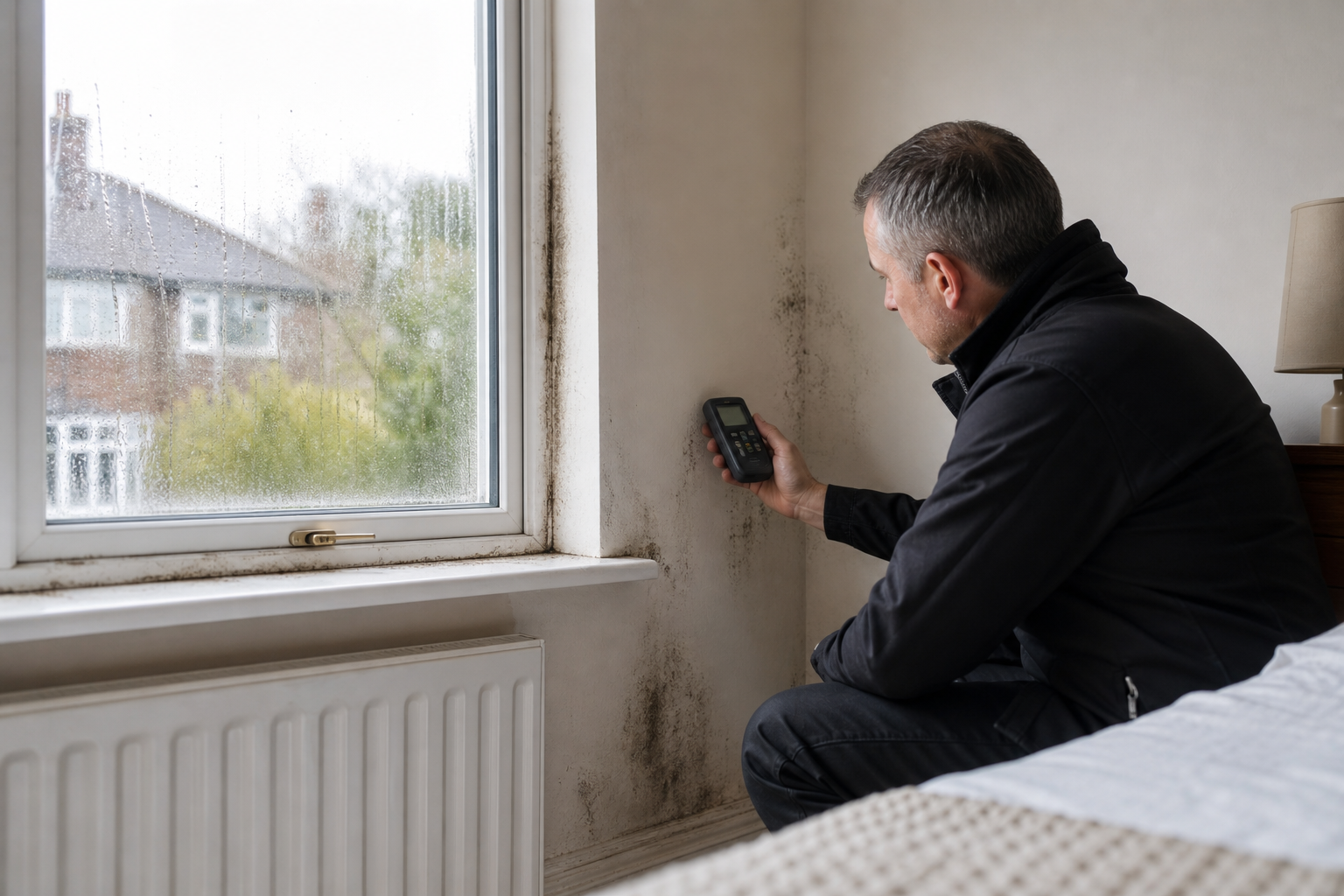
Moist indoor air will naturally collect on colder areas such as glass, reveals and bay window corners. However, if the structure around the opening is already wet from rain penetration, those surfaces stay colder for longer. That can create mould and surface moisture that looks like a ventilation issue when the real defect is outside.
Water rarely appears exactly where it gets in
Penetrating damp can track through masonry, around cavities, behind plaster and along joinery before it becomes visible indoors. A stain at the lower corner of a bay or below a sill may be some distance from the original entry point.
That is why repainting, wiping mould away or applying one standard damp treatment can miss the real problem completely.
Common causes of penetrating damp around windows and bay windows
1. Failed sealant between the frame and the wall
Perimeter sealant around windows does not last forever. Over time it can shrink, split or detach from the frame or surrounding masonry. Once the weather seal fails, wind-driven rain can work its way into the junction and soak the internal reveal.
2. Cracked render, open pointing or defective masonry
Older brickwork, damaged render and perished mortar joints can all allow water to pass through the external wall around a window opening. This is especially common where previous patch repairs have failed or where a property has an exposed elevation.
3. Damaged sills and poor drip details
Window sills are designed to throw water away from the face of the wall. If a sill is cracked, poorly detailed or not shedding water correctly, moisture can track back towards the opening instead of away from it. The result is often damp staining beneath the sill line and around the lower reveal.
4. Gutters, downpipes or other defects above the opening
The problem is not always the window itself. Overflowing gutters, leaking joints, defective downpipes and other high-level rainwater faults can saturate the wall above a window or bay. Moisture then works down through the structure until it becomes visible inside.
5. Bay window roof and flashing problems
Bay windows are particularly vulnerable because they include more junctions, more exposed faces and often a small roof section or weathered top detail. If that area has failed, rain can enter from above and show internally at the head, corners or sides of the bay.
6. Movement and ageing in older bay structures
Older bay windows can shift slightly over time. Even minor movement can open up joints between frames, masonry and coverings. Once those weak points appear, repeated wet weather can turn a small defect into a persistent damp problem.
Signs your window damp problem may be penetrating damp rather than simple condensation
Every property is different, but the following warning signs often suggest the issue needs a closer look:
Damp patches worsen after heavy rain or during windy wet weather.
The problem is concentrated around one window or one bay rather than across the whole room.
Paint blisters, wallpaper lifts or plaster softens around the reveal or below the sill.
Mould keeps returning even after cleaning and improving ventilation.
There is a musty smell around the opening.
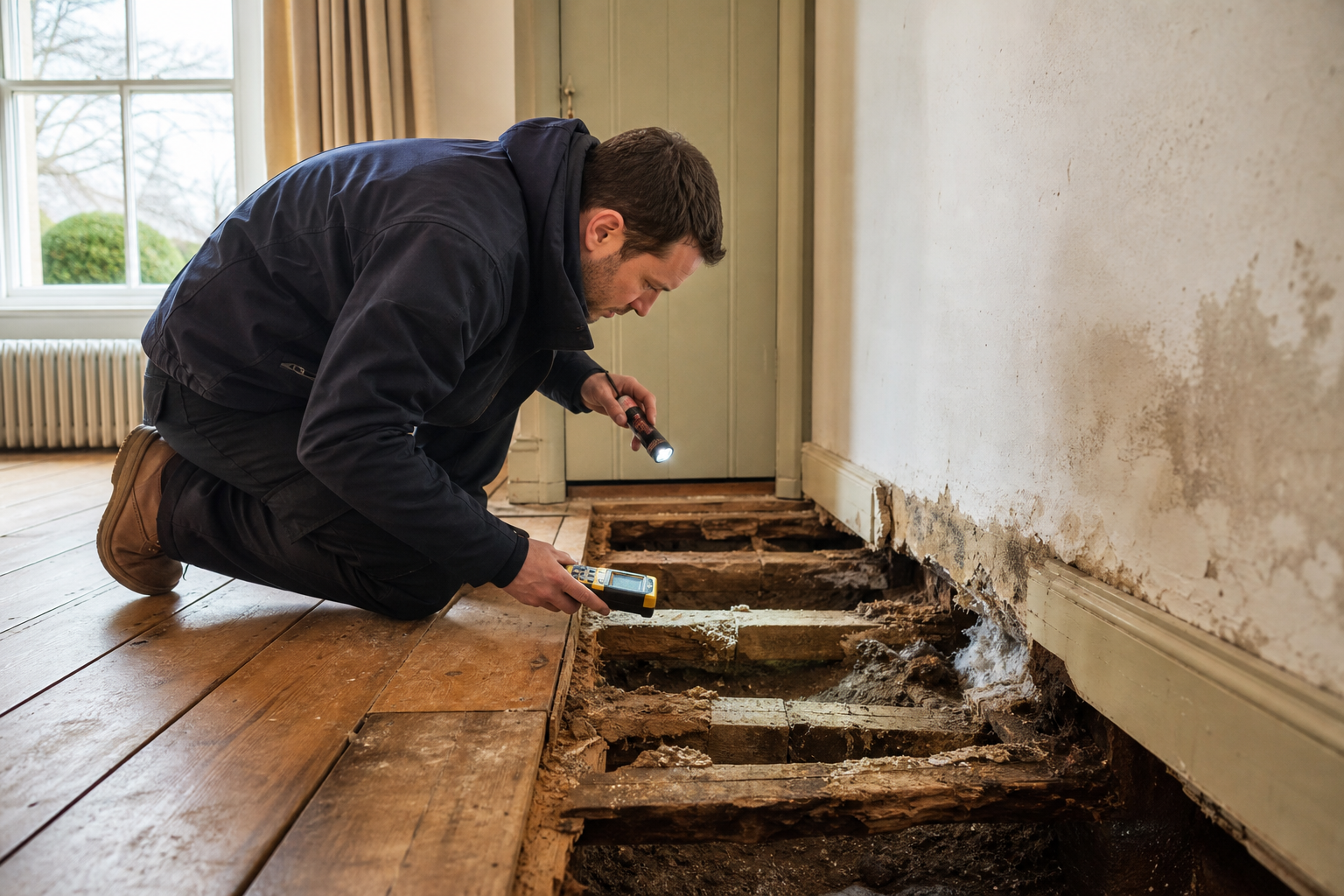
Timber trims, skirtings or boards close to the window begin to swell or decay.
The damp area sits below an external crack, joint, gutter or roof defect.
These symptoms do not automatically confirm penetrating damp, but they do indicate that a proper investigation is the sensible next step.
The right repair approach starts with a proper damp investigation
At Surrey Hills Damp, we focus on the cause before the cure. Damp around windows can come from more than one source at the same time, so diagnosis matters.
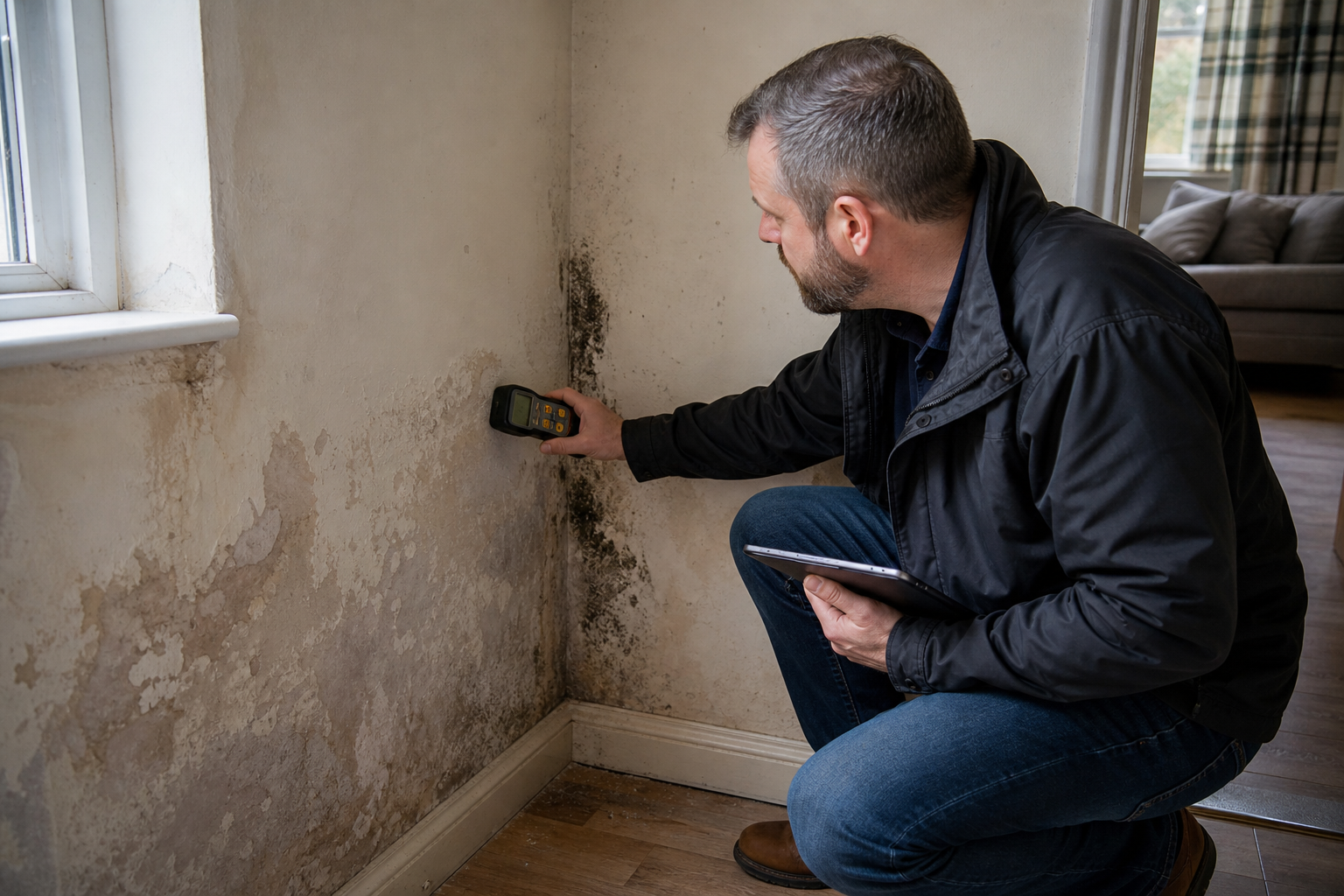
We inspect the outside first. The external envelope usually provides the best clues. We look at frame junctions, pointing, render, sills, rainwater goods, bay details and any high-level features above the affected area.
We assess the internal pattern of moisture. Staining, plaster breakdown, mould growth and the exact position of damage can help show how water is moving through the structure.
We use diagnostic equipment where appropriate. This helps us build a clearer picture of what is wet, how far it extends and whether there may be more than one issue involved.
We recommend repairs that fit the actual defect. That might mean localised external repairs, rainwater goods work, bay roof attention, plaster renewal or a combination of measures rather than one standard treatment.
Our damp investigation service is designed to establish whether you are dealing with rain penetration, condensation, a leak or a mixture of issues.
Where the problem centres on an exposed opening, we can advise on the most suitable window damp control approach rather than recommending unnecessary work. We also assess vulnerable projections and can recommend targeted bay window damp control where bay roofs, joints or exposed masonry are involved.
What the right repair might involve
The correct repair depends on the defect found. In practice, the solution may involve one or more of the following:
Renewing failed external sealant around the frame-to-wall junction.
Repairing cracked render, defective pointing or damaged masonry to stop rain ingress through the wall face.
Correcting sill defects so water sheds away from the building properly.
Repairing gutters, downpipes or high-level rainwater details that are saturating the wall above the window.
Resolving bay window roof or flashing problems where water is entering from above.
Replacing or reinstating damaged internal finishes once the moisture source has been dealt with and the area has had time to dry.
Not every job needs extensive remedial work, and not every damp patch around a window requires replastering. The key is matching the repair to the defect instead of treating the surface alone.
Why bay windows deserve special attention
Bay windows are one of the most common trouble spots we see because they are more complex than a flat wall opening.
They have multiple exposed faces taking the full force of wind-driven rain.
They include more joints between masonry, frames and weathered surfaces.
They often create colder internal corners where mould appears quickly if moisture is present.
Older bays can hide deterioration in coverings, flashings, trims and joinery.
That combination means bay window damp is easy to underestimate. What starts as a small stain can become ongoing plaster damage, mould growth or timber deterioration if the entry point is left unresolved.
Why property owners across Surrey choose Surrey Hills Damp
When you are dealing with a live damp problem, you want clear answers and honest advice. Surrey Hills Damp offers:
Over 15 years of experience
A background in Building Pathology
The use of diagnostic equipment to help identify the true moisture source
Domestic and commercial work across Surrey and the surrounding areas
Free written quotes
A 10-year guarantee
A fully insured service
Most importantly, we take an inspection-led approach. That helps our customers avoid spending money on repairs that do not address the real cause.
When to book a specialist survey for damp around a window or bay
It is worth booking a specialist investigation if:
The stain keeps returning after repainting or cleaning.
You can see cracking, failed sealant or signs of water ingress outside.
Mould forms repeatedly around one opening even when the room is ventilated.
The plaster feels soft, blown or crumbly.
You are seeing signs of timber decay close to the affected area.
You are buying a property and have noticed damp around windows or a bay.
If that sounds familiar, request a free written quote and book a damp investigation for your window or bay damp issue before the damage spreads further.
Frequently asked questions
What causes penetrating damp around windows in Surrey?
Common causes include failed sealant, cracked render, open pointing, damaged sills, leaking gutters above the opening and defects to bay window roofs or flashings. The exact cause varies from property to property, which is why a proper inspection matters.
Is damp around windows always condensation?
No. Condensation is common around windows, but it is not the only explanation. If the area is being affected by rainwater ingress, the symptoms can look very similar. That is one reason damp around openings is so often misdiagnosed.
Can a bay window leak lead to mould or timber damage?
Yes. Ongoing moisture around a bay can encourage mould growth, damage plaster and contribute to timber decay in trims, boards and nearby joinery. The longer the defect is left, the more extensive the internal damage can become.
Will sealing the inside edge of the window solve the problem?
Usually not if the moisture is entering from outside. Internal sealant may hide the symptoms for a short time, but it does not correct the external defect. In some cases, it can even trap moisture where it should be drying out.
Should I book a damp survey before buying a property with window staining?
If you have noticed staining, mould, damaged plaster or visible defects around windows or a bay, a specialist damp survey can be very useful before exchange. It can help you understand the likely cause, the extent of the issue and the repair approach that may be needed.
Conclusion
Damp around windows and bay windows rarely improves by itself. If the problem is caused by penetrating damp, surface cleaning and redecorating will only delay the proper repair.
At Surrey Hills Damp, we help property owners across Surrey diagnose window and bay damp issues properly and recommend the right remedial work based on the defect found. To arrange an inspection and request your free written quote, call 01403 889161 or email info@surreyhillsdamp.co.uk.