Hidden Leak or Damp Problem? Leak Detection Surrey Guide for Staining, Mould and Peeling Plaster
If you are searching for leak detection Surrey property owners can trust, you have probably already noticed something worrying. A stain on the ceiling, black mould on an outside wall, bubbling paint in a corner or plaster that keeps peeling back after redecoration can all point to moisture getting where it should not be.
The difficulty is that visible damage does not tell you the cause on its own. A hidden plumbing leak, condensation problem, rain penetration or older low-level damp issue can all create similar symptoms. At Surrey Hills Damp, we take an inspection-led approach from our base in Littlehampton, helping homeowners, landlords and businesses across Surrey identify the source before any repair work is recommended.
In this guide, we explain what different warning signs can mean, why damp problems are so often misdiagnosed and when it makes sense to book a specialist visit rather than guessing.
Why leak detection in Surrey properties is often misdiagnosed
Moisture does not always appear where it starts. Water can track behind plaster, follow pipe routes, soak into masonry, move across ceilings and collect on colder surfaces before it becomes visible indoors.
That is why a stain under a window is not always a window defect, and mould in one corner is not always just condensation. If the real cause is missed, cosmetic repairs tend to fail.
Staining may show up some distance from the true source.
Black mould may be a symptom of persistent moisture, not the root cause itself.
Peeling paint or plaster can happen with leaks, rain penetration, salt contamination and prolonged condensation.
More than one issue can exist at the same time, especially in older or previously repaired properties.
This is why proper diagnosis matters more than assumptions. The right fix depends on the type of moisture involved, how long it has been present and how it is moving through the building.
Leak detection Surrey: hidden leak or damp problem?
Signs the cause may be a hidden plumbing leak
A concealed water leak often creates a more localised and persistent damp pattern. The damage may appear around pipe runs, bathrooms, kitchens, utility rooms, heating systems or ceilings below first-floor plumbing.
The damp patch stays active even in dry weather.
The affected area is quite specific rather than spread across a whole cold wall.
Staining appears on a ceiling below a bathroom or near boxed-in pipework.
Skirting, flooring or plaster in one spot feels consistently damp.
A musty smell is concentrated in one area rather than across the whole room.
In some cases, property owners also notice changes in water pressure or unexplained ongoing moisture with no obvious external defect.
Hidden leaks are particularly easy to miss when the water is slow, intermittent or trapped behind finishes. By the time plaster bubbles or mould appears, the leak may have been active for some time.
Signs condensation may be the main issue
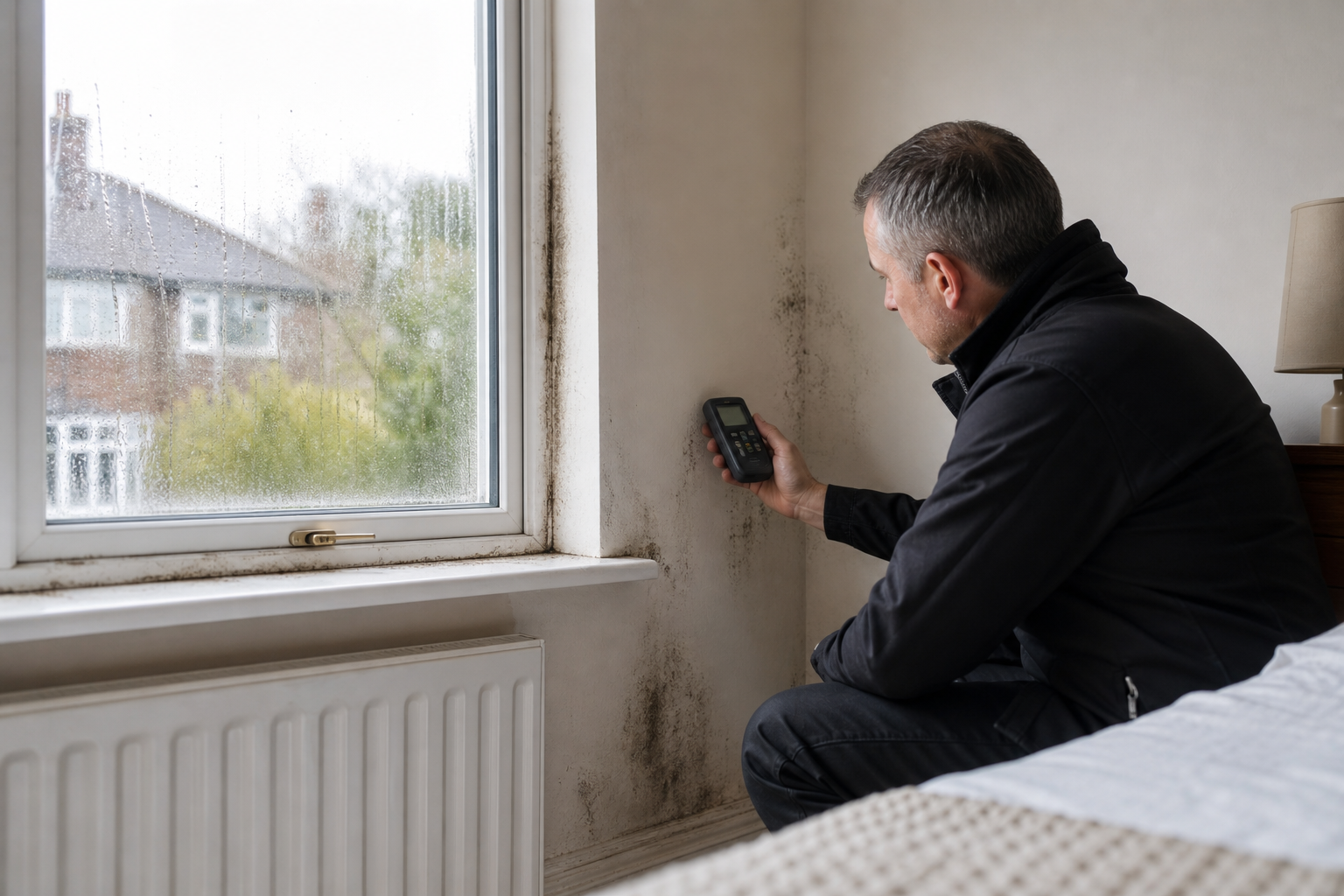
Condensation usually behaves differently. It is more often linked to humid indoor air meeting colder surfaces, especially in bedrooms, bathrooms, kitchens and poorly ventilated corners.
Mould is worst on colder external walls, around windows or behind furniture.
The problem is more noticeable in winter or first thing in the morning.
Moisture tends to sit on the surface rather than cause one sharply defined wet patch.
Several rooms show similar symptoms rather than one isolated area.
The property feels stuffy, and airflow is limited.
That said, condensation and leaks can overlap. A wall that is already damp from another source stays colder for longer, which can then attract surface condensation and mould as a secondary problem.
Signs penetrating damp may be more likely
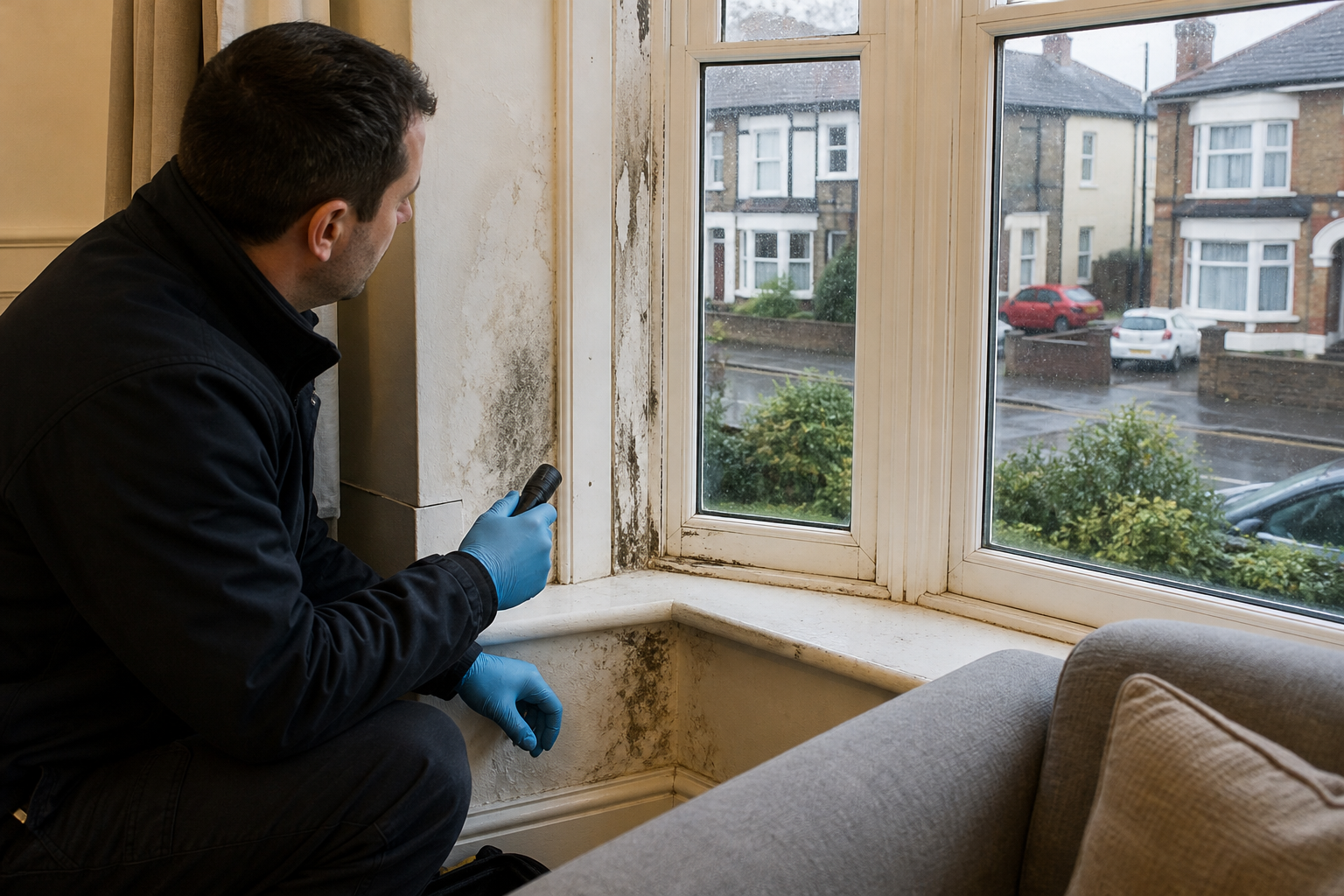
Penetrating damp is usually connected to defects that allow rainwater to enter the building fabric. Common risk areas include external walls, chimneys, roof abutments, window reveals and exposed elevations.
The damage worsens after heavy rain or windy weather.
Staining appears around windows, chimney breasts or upper walls.
Plaster breaks down on an outside-facing wall.
The affected area follows an external detail such as a reveal, bay window or roofline junction.
There are visible external maintenance issues nearby, such as cracked masonry, failed sealant or leaking rainwater goods.
If this sounds familiar, our advice on damp investigation services is designed to establish whether water is entering from outside or coming from a concealed internal source.
When low-level damp or historic salts can confuse the picture
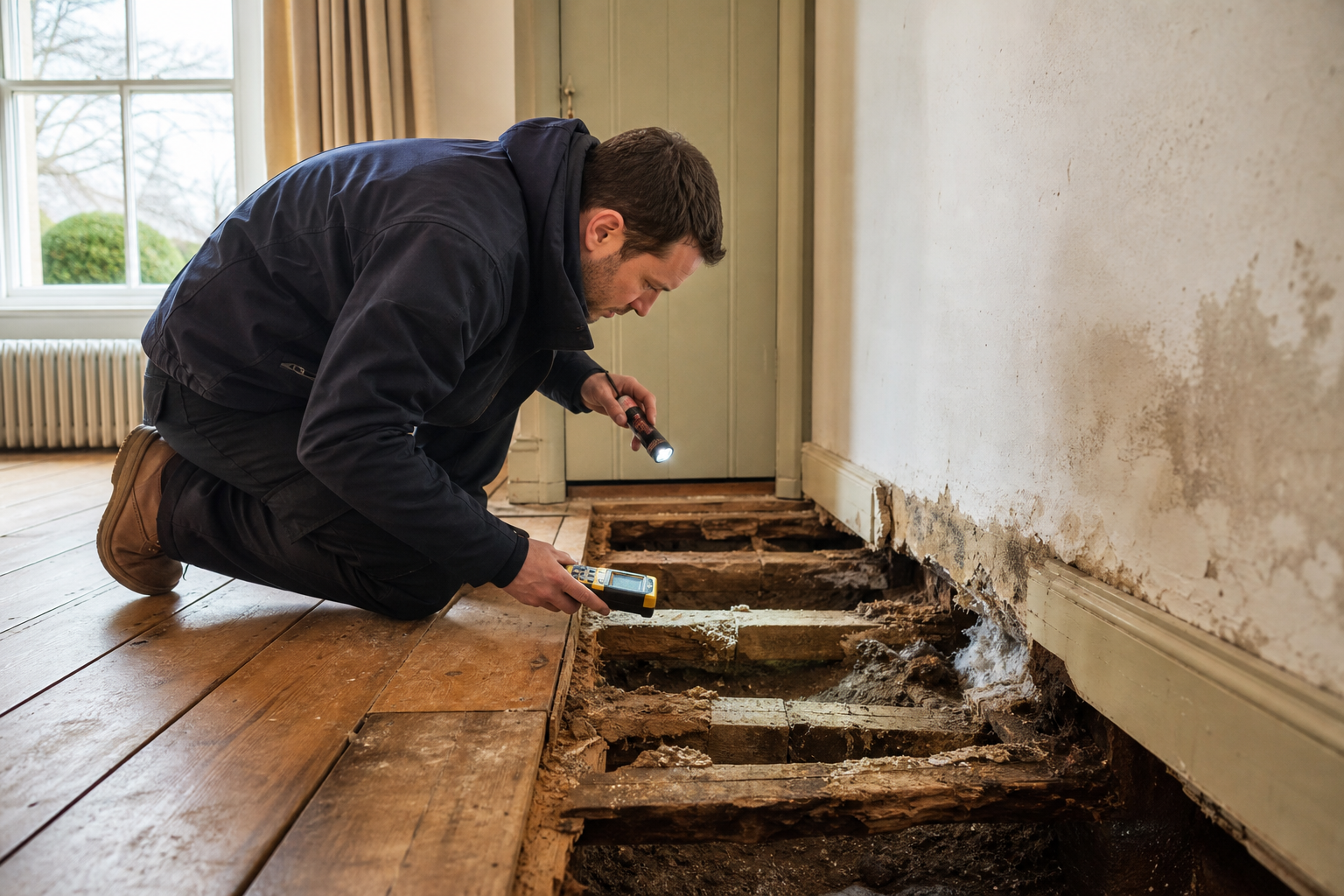
Ground-floor staining and damaged skirtings are sometimes assumed to be caused by a leak, but low-level damp has several possible explanations. It could be moisture from below, splashback, bridging, historic contamination or another long-running defect.
The important point is that not every damp patch near floor level means the same thing. If low walls are affected, we may also need to assess whether rising damp treatment is relevant or whether another moisture source is responsible.
What the symptoms can tell you
Staining
Brown, yellow or darker marks usually tell you that moisture has been moving through a surface over time. A ceiling stain below a bathroom often raises suspicion of a plumbing leak, while irregular wall staining on an exposed elevation may suggest rain penetration. The pattern matters, but it still needs investigation rather than guesswork.
Black mould
Black spot mould is often linked to condensation, but not always. If mould is limited to one unusual patch, keeps returning despite cleaning or appears alongside blistered plaster, it is worth ruling out a hidden leak or a penetrating damp defect.
Peeling paint, blown plaster or crumbling finishes
These signs usually mean the moisture problem is no longer new. Finishes begin to fail when water or salts have been present long enough to weaken adhesion and cause repeated evaporation. Replastering too early often leads to the same failure returning.
How we approach leak detection and damp investigation
At Surrey Hills Damp, we do not start with a one-size-fits-all treatment. We start with the evidence. Our role is to identify the most likely moisture source and the most sensible next step before money is spent on repairs.
From our base in Littlehampton, we help property owners across Surrey with honest, thorough inspections backed by 16 years of experience, a background in Building Pathology and the use of diagnostic equipment.
We review the pattern of the problem. When did it first appear? Does it worsen after rain, after bathing, during winter or all year round?
We inspect the affected area and surrounding structure. The visible patch is only part of the story, so we look at what is around it as well as what is directly damaged.
We use diagnostic equipment to assess moisture behaviour. This helps us narrow down whether the issue looks consistent with a leak, condensation, penetrating damp or another defect.
We explain the findings clearly. If remedial work is needed, we outline the most appropriate route rather than pushing unnecessary treatment.
Where the issue is linked to indoor moisture rather than a plumbing failure, we can also advise on condensation and mould solutions. If you are buying a property and want the problem assessed before exchange, our pre-purchase damp surveys can help identify hidden moisture risks early.
Why early investigation can save money
It is easy to focus on the visible damage, especially when staining or mould is affecting a room you use every day. The risk is that decorative repairs happen before the source is found.
You avoid repeating the same repair. Paint, filler and new plaster will not last if moisture is still active.
You reduce the risk of wider damage. Ongoing dampness can affect skirtings, joinery, floor timbers and adjacent finishes.
You are more likely to keep mould under control. Removing the moisture source gives treatments a better chance of lasting.
You keep remedial work targeted. A proper diagnosis helps avoid work that is either too little or more extensive than necessary.
This is especially important in older homes, previously altered properties and situations where several warning signs overlap.
When to arrange a specialist visit
It makes sense to book an investigation if any of the following apply:
A damp patch keeps returning after decorating.
You have staining on a ceiling below a bathroom, pipe route or upper room.
Black mould is appearing in one unusual area and does not behave like a typical ventilation issue.
Plaster is bubbling, peeling or breaking down around a chimney breast, window reveal or external wall.
The problem worsens after rain, but you are not sure whether the cause is outside or inside.
You can smell damp, but the source is not obvious.
You want clarity before carrying out remedial work or purchasing a property.
If that sounds familiar, arranging a dedicated inspection is usually the quickest way to stop guesswork from becoming unnecessary cost.
Frequently asked questions about leak detection in Surrey
How can I tell if damp is from a leak or condensation?
Condensation usually affects colder surfaces and often appears in corners, around windows or behind furniture, especially in winter. A hidden leak is more likely to create a localised damp patch, persistent staining or damage linked to plumbing routes, ceilings or one specific part of the wall.
Can black mould be caused by a hidden leak?
Yes. Although black mould is commonly linked to condensation, it can also develop where a concealed leak or penetrating damp defect is keeping part of the structure cold and damp. If mould is isolated to one odd area, it is worth investigating further.
Should I replaster before the source is identified?
Usually no. If plaster has failed because moisture is still active, new finishes can deteriorate again. It is normally better to identify and address the cause first, then carry out repairs once the area is ready.
Do you cover Surrey if you are based in Littlehampton?
Yes. Surrey Hills Damp is based in Littlehampton and works across Surrey and the surrounding areas for homeowners, landlords and businesses.
What happens after the inspection?
We explain what the evidence suggests, whether the issue looks consistent with a hidden leak, condensation, penetrating damp or another form of moisture, and what the most sensible next step is. We also offer free written quotes for relevant remedial work.
Get the cause identified before you repair the damage
Staining, mould and peeling plaster are warning signs, not diagnoses. If you act on the symptom without finding the cause, there is a good chance the problem will return.
At Surrey Hills Damp, we provide inspection-led advice for domestic and commercial properties across Surrey. If you are dealing with unexplained moisture, arrange a damp investigation and leak detection visit so we can identify the source before repairs are carried out.
Book an inspection today to get clear answers, honest advice and a targeted plan for putting the problem right.