Condensation and Black Mould in Surrey: Why It Keeps Coming Back and When to Get Specialist Help
If you are searching for condensation and mould control Surrey property owners can depend on, the problem has probably moved beyond a quick wipe-down. Black mould keeps coming back because the moisture feeding it is still there. You might notice it around windows, on external walls, behind wardrobes or in corners that never seem to dry properly.
At Surrey Hills Damp, we help homeowners, landlords and businesses across Surrey and the surrounding areas understand why that is happening. From our base in Littlehampton, we take an inspection-led approach that looks at the whole property before recommending any treatment. That matters because recurring mould is not always a simple ventilation issue. Cold surfaces, hidden water ingress, window bay defects and previous damp problems can all play a part.
In this guide, we explain why black mould returns, what warning signs to take seriously and when it is time to bring in a specialist.
Condensation and mould control Surrey: why black mould keeps returning
Black mould does not return because it is stubborn. It returns because the conditions that allow it to grow have not changed for long enough.
In most cases, mould needs three things: moisture in the air, a surface that stays cool enough for condensation to form, and limited airflow that allows dampness to linger. If one room keeps offering those conditions, the mould usually comes back even after cleaning and redecorating.
Surface cleaning only removes what you can see. It does not fix persistent humidity or cold spots.
Warm indoor air keeps hitting colder surfaces. This is common around window reveals, external corners and uninsulated wall sections.
Ventilation may be inadequate or poorly used. Bathrooms, kitchens and utility areas can feed moisture into nearby rooms.
Furniture placement can trap damp air. Wardrobes, sofas and stored items tight against external walls often create hidden mould growth.
Another damp defect may be involved. Penetrating damp, leaks or localised window damp can look like condensation at first glance.
This is why recurring mould should be treated as a diagnosis problem first, not just a cleaning problem.
What the location of black mould can reveal
Around windows and reveals
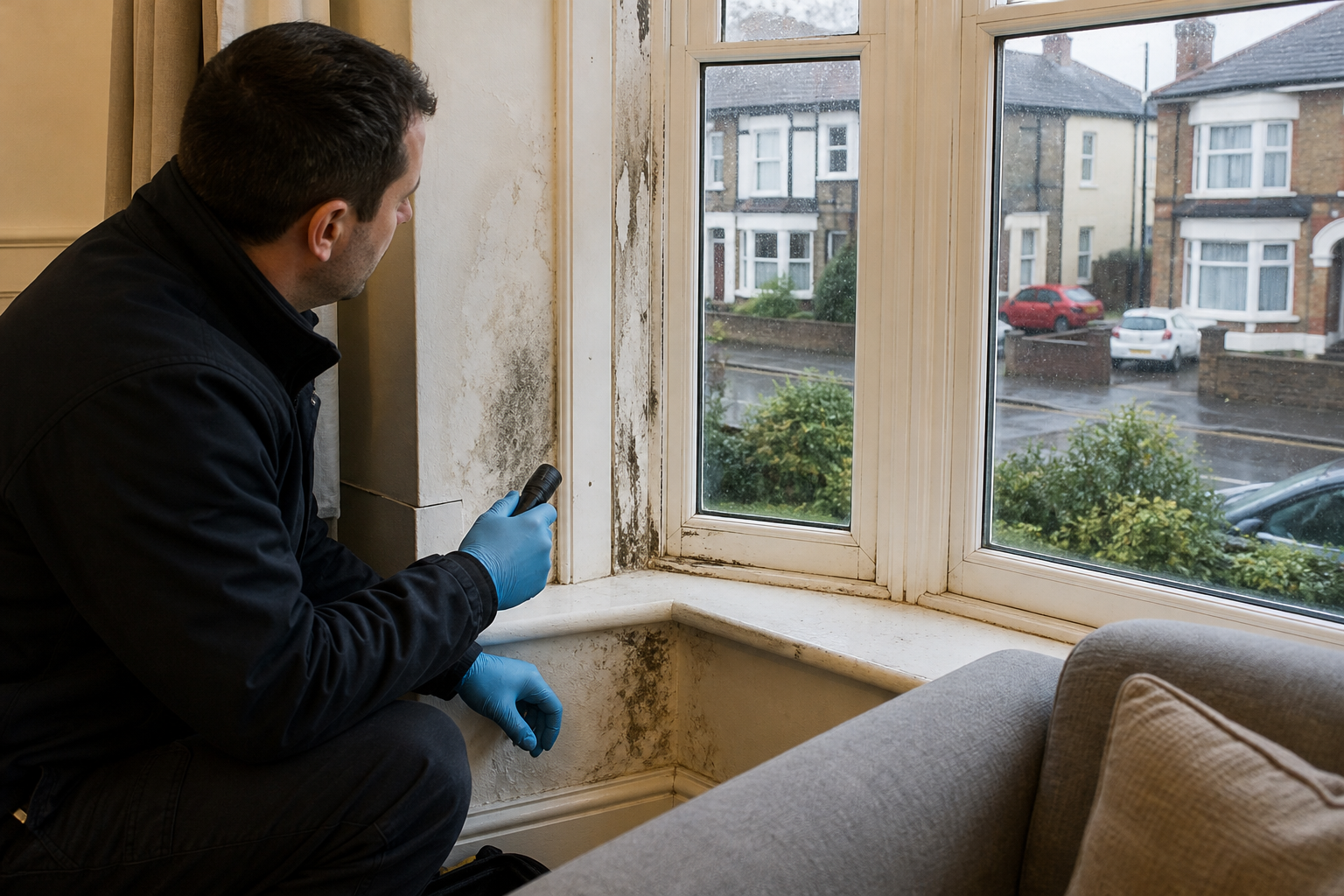
Mould around window frames, reveals and sills often points to condensation forming on the coldest parts of the room. It can also suggest a problem with ventilation, glazing performance or localised window damp control issues.
In corners of external walls
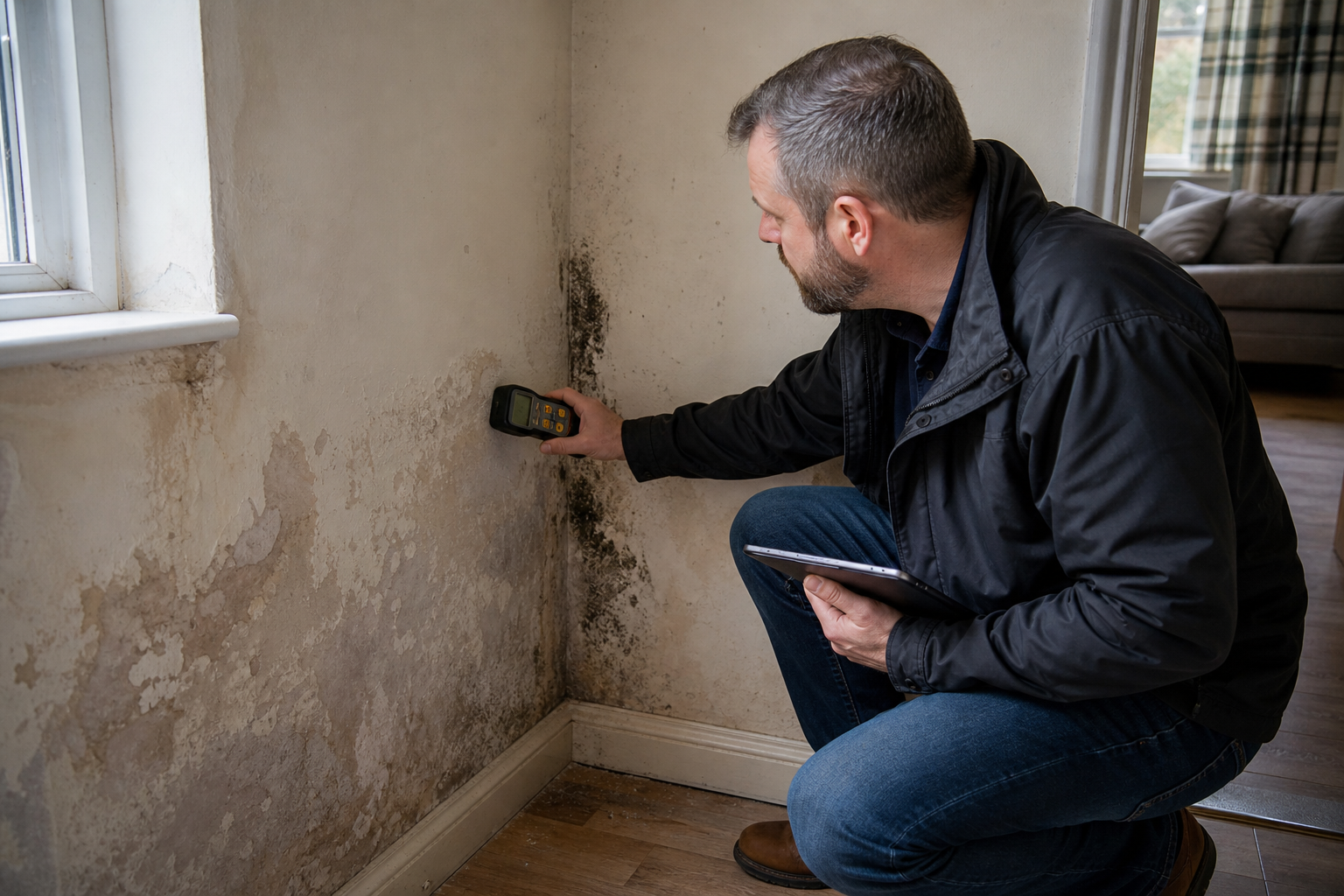
Dark spotting in upper corners or behind curtains can indicate cold bridging, restricted airflow or consistent moisture build-up in rooms that are heated unevenly.
Behind wardrobes and beds
Where large furniture sits against an outside wall, airflow is reduced and the surface behind it can stay cooler than the rest of the room. This is one of the most common patterns in bedrooms.
On chimney breasts, bays or isolated patches
When mould appears in one stubborn area rather than across a whole room, condensation may only be part of the story. Chimney-related damp, rain penetration, salts or a hidden defect can create a cold, moisture-prone surface that keeps attracting mould.
Common causes we investigate before recommending treatment
No two properties behave in exactly the same way. Older homes, altered layouts, blocked ventilation routes and modern living patterns can all affect indoor moisture levels. That is why we look beyond the visible staining.
1. Everyday moisture production
Cooking, showering, clothes drying indoors and normal occupancy all release moisture into the air. If that moisture cannot escape effectively, humidity rises and condensation becomes more likely.
2. Poor extraction and background ventilation
Extractor fans that are missing, underperforming or rarely used can leave bathrooms and kitchens too humid. Trickle vents, air bricks and general airflow also make a difference.
3. Cold surfaces and thermal bridging
Some parts of a room stay colder than others. Window bays, external corners, lintels and sections with limited insulation can act as repeated condensation points, especially in colder months.
4. Hidden leaks or water ingress
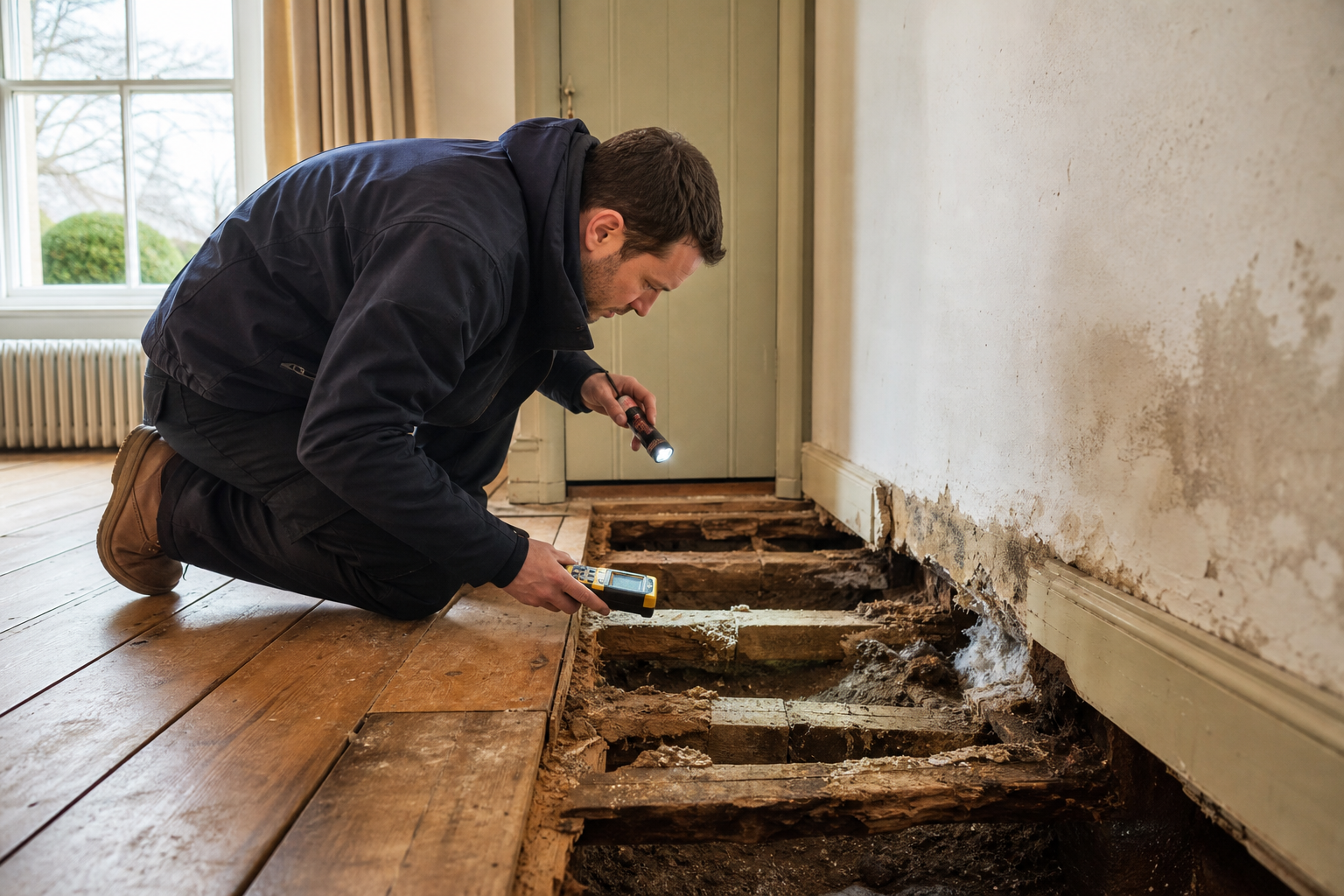
A small leak, defective seal or rain penetration issue can be mistaken for condensation, particularly if mould is only visible in one section of a wall or ceiling. In those cases, surface treatment alone will not solve the problem.
5. Previous repairs or decorative finishes trapping moisture
Impermeable paints, patch repairs and redecorating before a surface has fully dried can make a room look better temporarily while the underlying moisture pattern continues.
6. Overlapping damp problems
Some properties have more than one issue at once. For example, a room might suffer from everyday condensation while a nearby chimney breast, bay window or external wall has an additional defect that keeps that area colder and wetter than it should be.
When to get specialist help for recurring mould
It makes sense to get specialist advice when the same area keeps failing, the cause is unclear or you need a clear route to resolution rather than another temporary fix.
Black mould returns soon after cleaning or repainting.
You can see mould spreading across multiple rooms or levels of the property.
The problem is concentrated on one wall, chimney breast, bay or ceiling area.
There is a musty smell or visible damage to plaster, paint or joinery.
You suspect a leak, rain penetration or another building defect may be involved.
You are a landlord dealing with repeat mould complaints in a let property.
You manage business premises where moisture problems are affecting the condition of the interior.
You are buying a property and visible mould has been flagged during the purchase process.
In these situations, guessing can become expensive. The wrong treatment can delay the right one and allow the property fabric to deteriorate further.
What a proper damp and mould inspection should include
A useful inspection should do more than confirm that mould is present. It should explain why it is present and what action is proportionate.
At Surrey Hills Damp, our damp investigation services are designed to identify the source of the moisture before any remedial work is recommended. Using diagnostic equipment and an inspection-led process, we assess how the building is behaving rather than relying on assumptions.
A specialist inspection may include:
Reviewing the history of the problem and where it appears seasonally or repeatedly.
Inspecting the pattern of mould growth and the surfaces affected.
Assessing likely condensation points, airflow restrictions and room use.
Checking whether local defects such as window issues, external penetration or chimney-related damp may be contributing.
Looking for signs of wider moisture problems that could overlap with condensation.
Providing clear advice on the most sensible next step, whether that is ventilation improvement, repair work, monitoring or further remedial treatment.
If the issue is linked to a wider moisture defect, we can also advise on appropriate mould control and damp remedial work once the cause has been established.
Why wiping down mould is not a long-term solution
Cleaning visible mould has its place, especially to reduce staining while a problem is being addressed. But on its own, it rarely changes the conditions that caused the mould to grow.
If the room still holds too much moisture, if the wall still runs cold, or if there is an unnoticed defect feeding dampness into the area, the spotting usually returns. This is why many people feel trapped in a cycle of cleaning, repainting and seeing the same issue reappear.
Long-term mould control depends on accurate diagnosis. Sometimes the answer is improved extraction and everyday moisture management. Sometimes it is a repair to the building fabric. Sometimes it is both.
Our approach to condensation and mould control across Surrey
We work with homeowners, landlords and businesses across Surrey and the surrounding areas from our base in Littlehampton. As a 5-star rated independent damp company, we focus on honest advice, thorough inspections and treatment recommendations that fit the actual cause of the problem.
Surrey Hills Damp has over 15 years of experience, a background in Building Pathology and uses the latest diagnostic equipment to assess damp problems properly. We are fully insured and carry out both domestic and commercial work.
That means if recurring mould turns out not to be simple condensation, we can place it in the wider context of the property. The same inspection-led thinking supports our wider work in condensation control, timber and mould treatment, and pre-purchase damp surveys.
Our aim is straightforward: identify the cause, explain the issue clearly and recommend the right next step without overcomplicating the job.
Frequently asked questions
Is black mould always caused by condensation?
No. Black mould often appears where condensation is forming, but it can also sit alongside leaks, localised rain penetration, cold bridging or other damp defects. The visible mould is a symptom, not the diagnosis.
Can I just paint over black mould?
Painting over mould without solving the moisture problem is rarely a lasting fix. The staining may disappear temporarily, but if humidity, cold surfaces or damp ingress remain, the mould usually comes back through or around the new finish.
Do landlords benefit from a specialist mould inspection?
Yes. Where mould complaints keep returning, a specialist inspection can help establish whether the main driver is everyday condensation, a ventilation issue, a building defect or a combination of factors. That makes it easier to plan the right response.
Can you inspect mould problems before I buy a property?
Yes. If visible mould, staining or damp has been noted during the buying process, we can help investigate the likely cause. You can read more about our approach to pre-purchase damp surveys on our website.
Do you cover Surrey if you are based in Littlehampton?
Yes. We are based in Littlehampton and work across Surrey and the surrounding areas, helping domestic and commercial clients diagnose damp, condensation and mould problems correctly.
Conclusion
If black mould keeps returning, there is usually a reason beyond what is visible on the surface. The sooner the cause is identified, the sooner you can stop wasting time and money on short-term fixes.
If you need clear, honest advice on recurring condensation or mould, book a damp and mould inspection with Surrey Hills Damp. We will assess the likely cause, explain the right treatment options and, if remedial work is needed, provide clear recommendations and free written quotes.